The Best Shopify Alternatives for South African Businesses
Published: 18 November 2025
DevelopmentStrategy

South Africa’s online shopping scene is exploding. By 2025, e-commerce is expected to pass R130 billion (about $7–7.5 billion) , and more local entrepreneurs, creators, and SMEs are launching online stores than ever before. But as the market grows, so does one big question:
“Is Shopify really the best Ecommerce platform for South African businesses?”
Shopify is powerful and popular. but many merchants quickly discover that it doesn’t always match our local needs, especially when it comes to costs, payment methods, and flexibility. As an ecommerce website development company, we see this challenge every day.
So in this guide, we’ll break down:
- Why South Africans are looking for alternatives
- What local businesses actually want from an ecommerce platform
- The best Shopify alternatives available in South Africa
- How to choose the right one for your business
All explained in a simple, friendly, no-tech-speak way. Let’s go.
Jump To

Not Sure Which Ecommerce Platform to Choose?
Let Digital Humanity, South Africa’s ecommerce experts, guide you to the perfect Shopify alternative.
Why More South Africans Are Looking Beyond Shopify
Shopify is a great platform globally, but for many South African businesses, the real experience feels more expensive and limiting than expected. Here’s why more local merchants are starting to explore alternatives:
Cost and Currency Exposure:
Shopify’s monthly plans start at roughly R468/month for Basic and over R1,200/month for the next tier, but all plans are billed in USD. This means your actual payment can fluctuate with the exchange rate.
On top of that, essential apps for marketing, reporting, analytics, and premium themes are also priced in USD. As your store grows and you add more functionality, these dollar-based costs can pile up quickly, making Shopify significantly more expensive for South African merchants.
Payment Gateway Issues:
A major pain point for South African merchants is that Shopify Payments isn’t available in South africa.
Stores must use third-party gateways like PayFast, PayGate, or Peach Payments, each charging their own fees. On top of that, Shopify adds an extra 0.6–2% surcharge (according to your subscription plan ) per transaction for using an external gateway.
For example, a merchant on Shopify Basic (±R468/month) already pays about R5616/year in subscription fees. On top of that, they also face:
- Local gateway fees, often 2.9–5% per transaction
- Shopify’s additional: 2% surcharge
This layered fee structure can dramatically increase the cost of running a Shopify store in South Africa.
Limited Customization and Lock-In:
Shopify is a hosted platform that uses its own templating language, Liquid. This setup is convenient for beginners, but if you want deep custom designs, checkout tweaks, or advanced features, you usually need to hire a Shopify developer.
This creates a level of lock-in, your store runs on Shopify’s architecture, and moving away later can be tricky. In contrast, open-source platforms give merchants full ownership of their code and data, letting you migrate whenever you want, which is why many South African entrepreneurs prefer them.
SEO and Content Limitations:
SEO optimisation is crucial for South African ecommerce brands, but Shopify has some limitations. For example, URL structures like /collections/ and /products/ cannot be changed, which reduces flexibility. Its blogging system is also basic. so there are no true post categories, limited metadata options, and fewer content-SEO features compared to other platforms.
Many local SEO specialists point out that platforms with more granular control over URLs, content, and meta elements generally offer better long-term organic growth.
Support and Local Needs:
Shopify’s support is global, but it’s not always tailored to South Africa’s specific needs like tax rules, VAT handling, local logistics, or currency. Features often roll out in the US months before they become available here.
South African stores usually need ZAR pricing, VAT-compliant invoices, and checkout flows that work with EFT or SnapScan. all of which often require extra plugins on Shopify. Local platforms, by contrast, have support teams familiar with SA regulations and offer built-in features designed for the local market.
In summary:
While Shopify is popular worldwide, many South African merchants find it costly and limiting as they grow. With USD pricing, subscription fees, paid apps, and stacked gateway charges, costs add up fast.
That’s why more SA businesses are choosing platforms with fixed rand pricing, local payment integration, full SEO control, and features built for the South African market.
What Businesses Actually Want in an Ecommerce Platform
1. Affordable Pricing in Rand
Merchants want clear pricing in ZAR without hidden USD costs. They also prefer low or no transaction fees beyond the payment gateway itself. For example, WooCommerce has no platform fee, so you only pay for hosting and domains.
2. Local Payment Integration
When choosing a platform, South African businesses prioritize easy access to local payment methods. This includes PayFast, Peach Payments, Yoco, SnapScan, Ozow EFT, and similar options. Platforms like Ecwid, Wix, BigCommerce, and Magento already offer these integrations.
Businesses prefer platforms where local gateways are supported natively, without extra platform charges. This keeps costs down and checkout simple for customers. Shopify does allow SA gateway integration, but it adds extra transaction fees on top of the gateway’s own, something many local merchants try to avoid.
3. Full Control & Data Ownership:
South African merchants want the ability to export their data, customize their code, and avoid vendor lock-in. For example, WooCommerce emphasizes that “you own and control your data always” , whereas Shopify keeps stores locked into its ecosystem.
Many South African merchants prefer open-source platforms because they provide complete control over their store. Open-source solutions allow full code access, unlimited customizations, and the ability to move your store freely without being tied to a single vendor. This makes them especially appealing to developers and businesses looking for long-term flexibility.
4. Strong SEO & Content Tools
SEO is a top priority for SA stores. Merchants want customizable URLs, meta tags, blogging, and built-in marketing features. Platforms like Woocommerce often offer more flexibility than Shopify, letting SEO specialists directly optimize and improve rankings is a big advantage for local businesses.
5. Built-in Functionality
The more features a platform gives you without needing extra plugins, the better. This saves money, reduces technical issues, and makes your store easier to manage.
Here are the important features to look for:
- B2B features like company accounts, bulk ordering, and price lists
- B2C marketing tools such as email campaigns, discounts, and abandoned cart recovery
- Built-in analytics, mobile-friendly design, and the ability to sell on multiple channels (Facebook, Instagram, WhatsApp, etc.)
Platforms like BigCommerce and Magento include many of these features from the start, especially strong B2B tools.But WooCommerce and Ecwid usually require additional plugins or paid extensions to match the same functionality.
6. Local Support & Community
South African merchants value support that understands the local market, whether that’s local-language assistance, timezone-friendly help, or a supportive user community. For example, Shopstar offers a dedicated SA success team and quick response times.
In short:
South African merchants want platforms that treat ZAR pricing and local gateways as first-class citizens, scale with their business, and offer full flexibility, data ownership, and control, making open-source solutions particularly appealing.
Top 5 Shopify Alternatives for South African Merchants
Below, we break down the top Shopify alternatives for South African ecommerce stores, covering their key features, pricing, and what makes each platform a strong choice for SA merchants looking for better value, flexibility, and local support.
| Platform | Best Feature | Pricing (ZAR) | Ideal For | Setup Difficulty |
|---|---|---|---|---|
| Platform WooCommerce | Best Feature Full ownership & SEO control | Pricing (ZAR) Free but some features may need paid plugins | Ideal For Small–Medium SEO/content-focused stores | Setup Difficulty Medium-High |
| Platform Shopstar | Best Feature Native SA payments & local support | Pricing (ZAR) Starts from R110/month | Ideal For Small retailers & beginner merchants | Setup Difficulty Low |
| Platform Ecwid | Best Feature Quick e-commerce add-on to existing sites | Pricing (ZAR) Free adn starts from R85/month | Ideal For Small–Medium stores with existing websites/social presence | Setup Difficulty Low |
| Platform BigCommerce | Best Feature Built-in B2B & multi-channel | Pricing (ZAR) R496+/month | Ideal For Growing small–medium stores | Setup Difficulty Medium |
| Platform Magento (Adobe Commerce) | Best Feature Enterprise-level customization | Pricing (ZAR) Free But require cost hire developers | Ideal For Large SA businesses with complex needs | Setup Difficulty High |
| Platform Magento Wix eCommerce | Best Feature Drag-and-drop ease & visual design | Pricing (ZAR) R150–R250/month | Ideal For Micro-businesses & beginners | Setup Difficulty Very Low |
| Platform PrestaShop | Best Feature Flexible modules & open-source | Pricing (ZAR) Free + hosting | Ideal For Small–Medium catalogs | Setup Difficulty Medium-High |
In-Depth Analysis of Every Ecommerce Platform
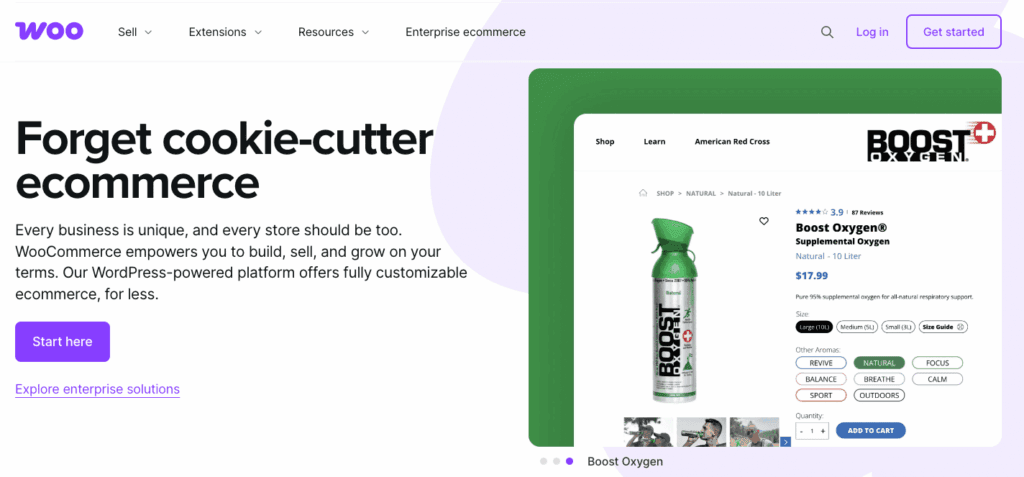
1. WooCommerce (WordPress)
WooCommerce is a WordPress plugin powering over 60% of global sites. It’s fully open-source, giving SA merchants complete control.
Key Features of Woocommerce:
- Cost: The plugin is free. Hosting and domains start around R10–R50/day locally. No monthly platform fees, unlike Shopify.
- Local Payments: Supports PayFast, PayGate, and community modules for Peach Payments and SnapScan. Merchants pay only gateway fees, no extra platform surcharge.
- Data Ownership & Customization: Full access to CSS/HTML/JS, editable URLs, meta tags, and SEO management. Blogging and content marketing are fully supported.
- Scalability: Can handle medium-to-large catalogs. High-traffic stores may require managed hosting (AWS, VPS) and ongoing plugin maintenance.
Drawbacks of Woocommerce:
- Requires technical setup and maintenance and the security updates, backups, SSL, plugin updates are the merchant’s responsibility.
- Some advanced features rely on paid plugins, often priced in USD, creating potential hidden costs.
Why it’s a top Shopify alternative:
WooCommerce eliminates Shopify’s extra gateway fees and USD exposure, provides full data ownership, and scales effectively, making it Best for small and medium South African businesses that rely on content-heavy, SEO-driven stores.”
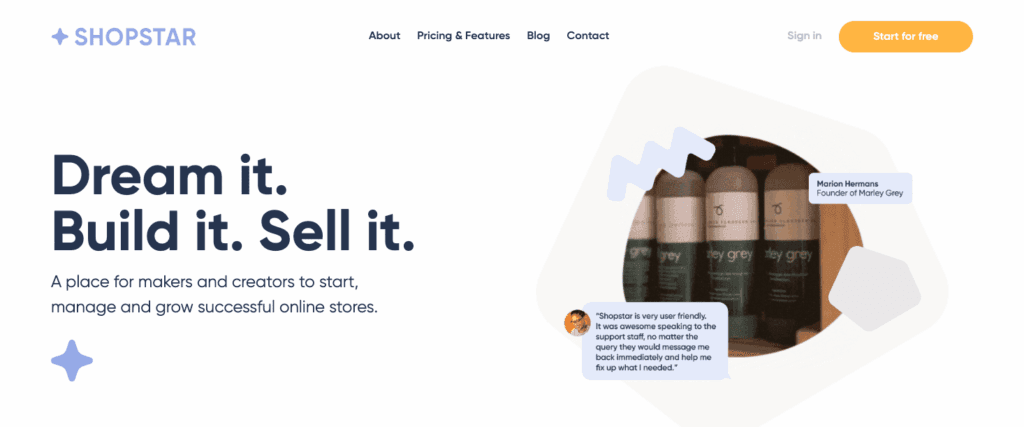
2.Shopstar
Shopstar is a South African SaaS built for local small businesses.
Key Features of Shopstar:
- Integrated Payments: Shopstar Pay supports EFT, SnapScan, PayFast, Peach, and card payments,no extra platform surcharge.
- Local Compliance: VAT-ready, ZAR pricing, templates, and customer support tailored for SA. The support team is SA-based with rapid response.
- Pricing Transparency: Plans from R220–R740/month, all-inclusive with no hidden app or gateway fees.
- Ease of Use: Drag-and-drop setup, pre-built templates, and a built-in local dropshipping marketplace for easy product sourcing.
Drawbacks of Shopstar:
- Limited B2B or enterprise-level capabilities.
- Themes and ecosystem are smaller than WordPress so heavy customization is limited.
Why it’s a top Shopify alternative:
Shopstar eliminates hidden fees, includes native SA payment integration, and provides local support, making it ideal for small and medium South African retailers who want Shopify-like ease, quick setup, and a cost-effective, locally focused solution.
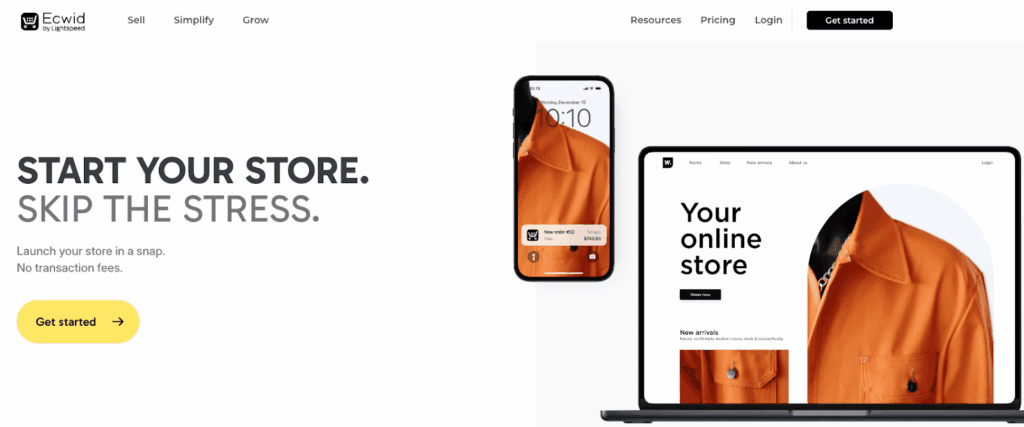
3.Ecwid
Ecwid is a cloud-based shopping cart that can be added to any website or social profile (WordPress, Joomla, Wix, Weebly) or used to sell directly on Facebook, Instagram, or Google. It’s ideal for small and medium South African businesses wanting quick e-commerce integration without rebuilding a website.
Key Features of Ecwid:
- Free & Scalable Plans: Free tier up to 5 products with unlimited bandwidth for testing. Paid plans scale by product count:
- Venture: ~$25/month (~R450) for up to 100 products
- Business: ~$45/month (~R800+) for up to 2,500 products
- Unlimited: ~$105/month (~R1,900) for unlimited products
(All plans can be paid monthly; annual billing offers savings)
- Extensive Payment Support: Works with over 40 payment providers, including PayFast, Peach Payments, PayGate, and global options like PayPal. Offline/manual payments supported.
- Multi-Channel Sales: Sell on your site, Facebook Shops, Instagram Checkout, Pinterest Buy buttons, and in-person via Ecwid’s ShopApp POS.
- No Hosting Hassles: Cloud-hosted, so SA merchants don’t worry about servers, updates, or security. Setup is simple: enter products and embed a code snippet.
Drawbacks of Ecwid:
- Limited CMS and SEO capabilities, not a full website builder. Richer content (blogs, custom layouts) may require a separate site.
- Some SEO tools, email marketing, and advanced discount features are locked to higher-tier plans.
Why it’s a top Shopify alternative:
Ecwid enables SA businesses to quickly add e-commerce, integrate local payments, and sell across multiple channels without extra platform fees, making it ideal for small and medium merchants with existing websites or social followings.
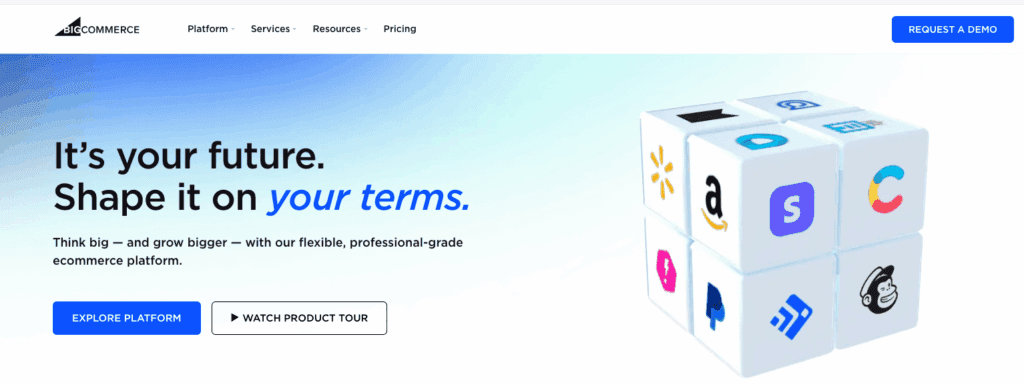
4.BigCommerce
BigCommerce is a fully-hosted e-commerce platform, similar to Shopify, but geared toward growing small and medium South African businesses and enterprises.
Key Features of BigCommerce:
- Pricing: Plans start around R530/month for the Standard tier . Competitive with Shopify, and BigCommerce never charges extra transaction fees. You pay only the plan fee plus your gateway fees.
- Local Gateways & Channels: Integrates natively with PayFast, Peach Payments, Yoco, and supports omnichannel selling (Facebook Shops, Google Shopping, local marketplaces like Takealot). Built-in SEO tools and flexible catalogs help boost visibility.
- Built-in B2B Functionality: Includes company accounts, custom pricing, tax exemptions, and multi-storefront support—useful for SA retailers selling to both consumers and businesses.
- Development Flexibility: Offers robust API and headless commerce options, allowing custom front-ends (mobile apps or websites) while using BigCommerce as the backend.
Drawbacks of BigCommerce:
- Unlocking all features or doing deep customizations may require developer assistance.
- App ecosystem often includes USD-based costs, similar to Shopify.
- Top-tier plans can become expensive, aimed more at scaling businesses than hobby stores.
Why it’s a top Shopify alternative:
BigCommerce provides built-in SA payment integration, no extra platform transaction fees, and robust multi-channel & B2B features, making it ideal for small and medium South African businesses scaling beyond Shopify’s Basic plan.
5.Magento (Adobe Commerce)
Magento is a widely-used open-source e-commerce platform (Adobe Commerce). It comes in two editions: the free Community Edition (open-source) and the paid Adobe Commerce Cloud. It’s designed for large or complex South African businesses that need full control and scalability.

Key Features of Magento:
- Maximal Customization: Supports large catalogs, multiple brands, languages, and regions. Robust product management, customer segmentation, and advanced promotional rules. SA teams can fully customize checkout flows and page templates.
- Built-in B2B & Multi-Store: Includes company accounts, custom pricing, quote management, and multi-storefront capabilities, ideal for wholesalers or multi-brand retailers in SA .
- SA Payments & Integrations: Integrates with PayFast, Peach, Ozow, supports multi-currency, and connects to local ERP/CRM/accounting systems like Sage or Xero.
- Community & Support: Large global developer community plus local agencies and developers experienced in Magento.
Drawbacks of Magento:
- High complexity and cost: setup and maintenance require skilled developers. Hosting must be robust, costing significantly more than Shopify or WooCommerce. Paid Adobe Commerce licensing can reach R30k–R50k+/month for large enterprises.
- Steep learning curve: managing the admin, updates, and security requires training and expertise. Not plug-and-play.
Why it’s a top Shopify alternative:
Magento provides full open-source control, enterprise-level customization, and native SA payment integrations, making it ideal for large South African businesses with complex B2B or multi-store needs. It avoids Shopify’s limitations on customization, scalability, and gateway fees.
Other Notable Ecommerce Options
- Wix eCommerce: A popular website builder with e-commerce. It includes PayFast and Yoco integrations and plans start from roughly R150–R250/month for e-commerce. It’s very user-friendly (drag-and-drop) and great for visual design. The downside is scalability: Wix stores aren’t as flexible or powerful for large catalogs or B2B, and advanced features often require Wix’s paid app store. Still, for micro-businesses and beginners, it’s a solid step up from basic web builders.
- PrestaShop: Another open-source platform (free to download). It offers high flexibility (good SEO, multi-language, many modules) and is used worldwide. In SA, it can integrate with local gateways via community modules. However, like Magento, it requires technical skill to host and customize. It sits between WooCommerce and Magento in complexity.
How to Choose the Right Shopify Alternative
Choosing the right platform isn’t about which one is “best” overall, it’s about which one is best for where your business is right now. Here’s a simple way to figure out what will actually work for you in South Africa.
1. If You’re a Startup or Small Seller
When you’re just starting out, you don’t want stress. You want something that:
- works out of the box
- supports SA payment methods
- doesn’t cost a fortune
Shopstar is a great starting point because it’s local, easy to use, and already plugs into South African gateways.
Ecwid is brilliant if you want to test the waters — the free plan means you can start selling with almost no risk and even add it to an existing website or Instagram/Facebook page.
Wix is also beginner-friendly, but always check that your preferred SA payment gateway is supported.
Best for: quick setup, small budgets, and sellers who just want to start earning without learning code.
2. If You’re a Growing SME
Once orders pick up, you need a platform that won’t choke when things get busy.
WooCommerce gives you loads of freedom and great SEO potential. It’s cost-effective, but you’ll need someone who understands hosting or at least isn’t afraid of a bit of tech.
BigCommerce is solid if you’re expanding onto multiple channels or selling B2B as well as B2C. It’s also a popular upgrade path for SA brands that outgrow Shopify or WooCommerce.
Best for: shops with growing traffic, multi-channel selling, and businesses needing more structure than a starter platform provides.
3. If You’re Tech-Savvy or Have Developers
If you (or your team) enjoy tinkering, customising, and building things “your way,” then you’ve got more powerful options.
WooCommerce can be moulded into almost anything with the right plugins or custom code.
Magento (Adobe Commerce) is the heavy-duty choice for stores with complex rules, big catalogues, or custom integrations. But be warned, it needs proper development time and budget to run properly.
Best for: advanced builds, custom features, and teams comfortable working with code.
4. If You’re an Established Brand or a B2B Operation
Bigger stores, wholesalers, and distributors need a platform that won’t fall over when things get busy and can handle complex pricing and catalogues.
Magento and BigCommerce Enterprise are both strong options for South African brands that operate nationwide or across Africa. They offer:
- multi-store setups
- custom pricing for different customer groups
- strong performance
- advanced B2B tools
They’re not cheap, but they scale cleanly and reliably.
Best for: enterprise ecommerce, wholesalers, and SA/Africa-wide distribution.
5. If You’re Budget-Conscious
If you want to keep things affordable without feeling limited:
WooCommerce is still one of the cheapest ways to run a full online store if you use affordable hosting.
Shopstar gives you simple, predictable pricing in rands and removes the stress of managing your own hosting or servers.
Just remember: payment gateway fees and optional plugins can still add up, no matter which platform you choose.
Best for: predictable monthly costs and sellers who want value without complexity.
Final Thoughts
South Africa’s ecommerce market is growing fast and so is the need for platforms that understand our unique needs. Shopify is great globally, but here at home it often becomes expensive and restrictive.
Luckily, South African merchants have fantastic alternatives that:
- Support local payments
- Charge in rands
- Offer flexibility
- Include the right features
- And don’t punish you with extra fees
And that’s where Digital Humanity comes in.We help you choose the right platform based on your business goals and then build a fast, beautiful, fully optimised online store that works for you.
Whether you’re a brand-new online seller or a growing retailer, you don’t have to guess your way through the platform decision. We guide you every step of the way.
Related Blogs

Development
How to Build a Budgeting App in South Africa (Complete 2026 Guide)
South Africa is experiencing a rapid shift toward digital money management. Rising living costs, increasing household debt, and widespread mobile banking adoption have created strong demand for budgeting apps that help individuals and businesses manage their finances better.

DevelopmentStrategy
Low-Code vs. Custom Mobile App Development: What’s Best for South African Startups in 2026?
Low code mobile app development vs custom mobile app development is a question South African startups in 2026 are asking in one of the most competitive and cost-sensitive environments the country has ever seen. Funding is more selective, customers expect world-class digital experiences, and infrastructure realities like load shedding, data costs, and device diversity still shape how mobile apps are used.
Strategy
Best 6 Payment Gateways in South Africa: How to Choose and Integrate the Right One
If you’re searching for payment gateways in South Africa, you’re not here for theory. You want to know which options exist, how they actually work, and which one will perform best once integrated into your website, store, or app. South African payments aren’t simple, customers use cards, EFT, QR codes, and instalments, often on the same site.