Best 6 Payment Gateways in South Africa: How to Choose and Integrate the Right One
Published: 8 January 2026
Strategy
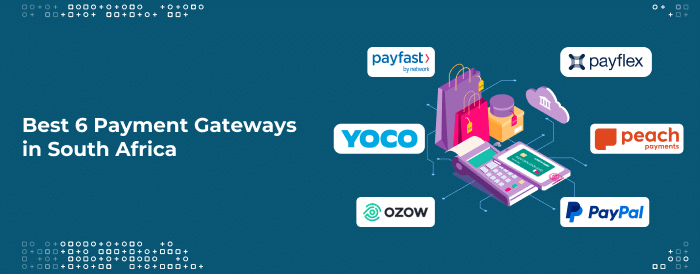
If you’re searching for payment gateways in South Africa, you’re not here for theory. You want to know which options exist, how they actually work, and which one will perform best once integrated into your website, store, or app. South African payments aren’t simple, customers use cards, EFT, QR codes, and instalments, often on the same site. The “best” gateway depends less on brand names and more on how payments behave in real transactions.
As a trusted payment gateway integration services provider, we prepared this guide to break down the top payment gateways in South Africa, explain their features and fees, and show where each one fits for your business.
Jump To

Best Payment Gateways in South Africa (At a Glance)
| Payment Gateway | Payment Methods | Typical Setup Time | Settlement Speed | Technical Effort | Hidden Cost Risk | Best For |
|---|---|---|---|---|---|---|
| Payment Gateway PayFast | Payment Methods Cards, EFT, QR, BNPL | Typical Setup Time 1–2 days | Settlement Speed 2–3 business days | Technical Effort Low | Hidden Cost Risk Medium (payout fees) | Best For SMEs needing fast launch |
| Payment Gateway Yoco | Payment Methods Cards only | Typical Setup Time Same day | Settlement Speed Next business day | Technical Effort Very Low | Hidden Cost Risk Low | Best For Card-first businesses |
| Payment Gateway Ozow | Payment Methods Instant EFT | Typical Setup Time 1–3 days | Settlement Speed Same day | Technical Effort Low–Medium | Hidden Cost Risk Low | Best For EFT-heavy audiences |
| Payment Gateway Payflex | Payment Methods BNPL (instalments) | Typical Setup Time 3–5 days | Settlement Speed Immediate to merchant | Technical Effort Low | Hidden Cost Risk High (merchant fees) | Best For High AOV products |
| Payment Gateway Peach Payments | Payment Methods Cards, EFT, BNPL | Typical Setup Time 3–7 days | Settlement Speed Next business day | Technical Effort Medium | Hidden Cost Risk Medium | Best For Scaling ecommerce |
| Payment Gateway PayPal | Payment Methods International cards | Typical Setup Time Same day | Settlement Speed Delayed + FX | Technical Effort Very Low | Hidden Cost Risk High (FX + fees) | Best For Global customers |
If you want details, comparisons, and fees then keep reading 👇
Why Choosing the Right Payment Gateway Matters in South Africa
What Is a Payment Gateway?
A payment gateway is the technology that allows your business to accept online payments securely. It acts as the connection between your customer, their bank, and your business. When a customer pays on your website or app, the gateway securely captures their payment details, sends the request to the bank, and confirms whether the payment was approved or declined. The result is then sent back to your website in real time. Without a secure and compliant payment gateway, you cannot legally accept online payments in South Africa. This makes it an essential part of any e-commerce store, booking platform, SaaS product, or online service.
What Does Payment Gateway Integration Mean?
Payment gateway integration is the process of connecting your website, online store, or software application to a payment gateway so payments work smoothly and automatically. A good integration ensures customers can complete checkout without errors, delays, or confusion. It also ensures your system correctly records each transaction, updates payment statuses, creates orders after successful payments, manages refunds and reversals, and tracks settlements.
Why Payment Gateway Integration Is Important in South Africa
South African customers have specific payment expectations that businesses must design for. Many prefer Instant EFT over card payments, look for clear trust signals at checkout, and abandon payment pages that feel slow or confusing. Most online purchases also happen on mobile devices, which means the payment experience must be fast and simple. A well-integrated payment gateway reduces checkout abandonment, improves payment success rates, builds trust at the moment of payment, and protects your cash flow through reliable settlements. A poorly integrated solution may not fail visibly, but it quietly costs your business money through dropped payments and missed conversions.
Top 6 Payment Gateways In South Africa ( Detailed Analysis)
Below are the top 7 payment gateways for integrating payments into a digital product in South Africa: PayFast, Yoco, Ozow, Payflex, Peach Payments, and PayPal. Read the detailed analysis
1.PayFast
PayFast is one of the most commonly used payment gateways in South Africa because it allows businesses to accept multiple local payment methods through a single integration. It is often the fastest way for a business to start taking online payments without heavy technical work.

Features
- PayFast allows businesses to accept credit and debit card payments via Visa and Mastercard.
- It supports Instant EFT, which is widely trusted by South African customers who prefer bank-based payments.
- It enables SnapScan and Zapper QR payments for mobile users.
- It integrates Mobicred to support Buy Now Pay Later purchases.
- It works with WooCommerce, Shopify, and custom-built websites.
- It supports both hosted checkout pages and API-based integrations.
Fees
- Card payments typically cost around 3.5% per transaction.
- Instant EFT usually ranges between 2.0% and 2.5%.
- SnapScan and Zapper are priced similarly to EF.
- A payout fee of approximately R4 applies per withdrawal.
- There is no monthly fee, but costs rise with volume.
Cons
PayFast becomes expensive at scale due to higher transaction fees. Payout fees apply every time funds are withdrawn. The platform offers limited flexibility for subscriptions, marketplaces, or advanced payment logic. Checkout customisation and reporting are basic for high-volume businesses.
Best for
Small to medium South African businesses, ecommerce stores that want cards, EFT, and QR payments quickly, and service businesses that need a simple and trusted checkout.
2.Yoco
Yoco is best known for card machines, but its online payment gateway is one of the most reliable card-only solutions in South Africa. It focuses on simplicity and consistency rather than offering many payment methods.
Features
- Yoco supports Visa and Mastercard online payments.
- It provides a fast onboarding process with minimal setup.
- It offers a clean, mobile-friendly checkout experience.
- It integrates with common ecommerce platforms and custom websites through plugins and APIs.
Fees
- Card transaction fees generally range from 2.9% to 3.2% depending on volume.
- There is no monthly fee. Settlement timing is predictable.
Cons
Yoco does not support Instant EFT, QR payments, or Buy Now Pay Later options. It cannot function as a complete standalone solution for many South African audiences.
Best for
Businesses with card-heavy customers, simple ecommerce stores, and companies pairing Yoco with an EFT gateway such as Ozow.
3.Ozow
Ozow is a specialist Instant EFT gateway built to reduce failed EFT payments and speed up confirmation. It is widely used by businesses whose customers prefer bank-based payments.

Features
- Ozow enables real-time EFT payments directly from major South African banks.
- It confirms payments instantly to the merchant.
- It integrates with ecommerce platforms and custom systems through plugins and APIs.
Fees
- Instant EFT fees typically range between 1.5% and 2.5% depending on volume.
- Refunds may incur additional fees.
Cons
Ozow supports EFT only and does not process card payments. Businesses must integrate a second gateway to support cards or wallets.
Best for
Ecommerce stores and platforms with EFT-first customers and businesses looking to reduce payment drop-offs caused by manual EFT.
4.Payflex
Payflex is a Buy Now Pay Later provider that allows customers to pay for purchases in interest-free instalments.
Features
- Payflex allows customers to split payments into four instalments.
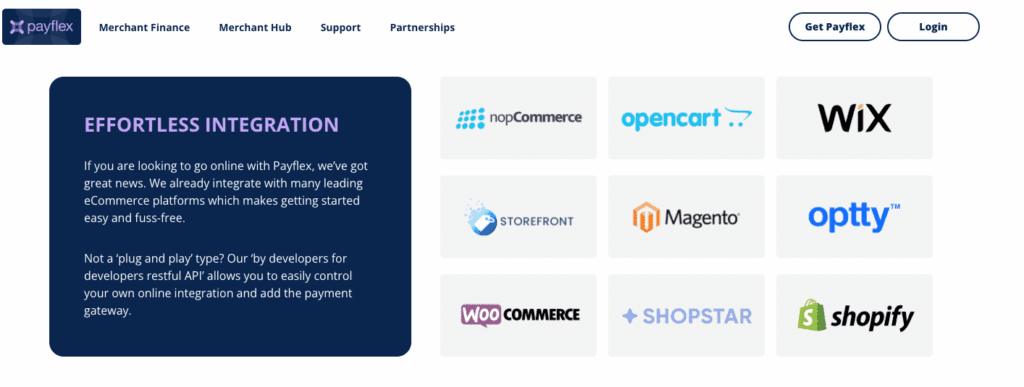
- Merchants receive the full amount upfront. It integrates with major ecommerce platforms.
Fees
Merchant fees are higher than standard card payments and vary by agreement.
Cons
Fees are relatively high. Customers must qualify for Payflex, which can reduce eligibility.
Best for
High-value ecommerce products and services where instalment payments improve conversion.
5.Peach Payments
Peach Payments is a mid-market gateway that suits businesses growing beyond entry-level payment providers.

Features
- Peach Payments supports card payments, Instant EFT, and BNPL options.
- It offers PayPal support on enterprise plans.
- It integrates with ecommerce platforms and custom systems.
Fees
- Card fees typically range between 2.7% and 3.2%.
- EFT pricing varies by volume.
Cons
- Setup is more complex than beginner gateways.
- Advanced features require higher-tier plans.
Best for
Growing ecommerce businesses with increasing transaction volumes.
6.PayPal
PayPal is mainly used by South African businesses to accept international payments.

Features
- PayPal supports global card payments and international currencies.
- It integrates easily with most platforms.
Fees
Fees are high due to transaction, FX, and withdrawal costs.
Cons
Does not settle in ZAR. FX rules and fees make it expensive for local payments.
Best for
Businesses selling to international customers.
Final Note: There is no single “best” payment gateway in South Africa. The right choice depends on customer behaviour, platform type, transaction volume, and integration complexity. Most serious businesses evolve their payment stack over time rather than relying on one gateway forever.
Best payment gateways in South Africa by use case:
- Yoco is best for card payments.
- PayFast is the best all-round option for cards, Instant EFT, QR payments, and BNPL.
- Ozow is best for Instant EFT.
- SnapScan is best for QR code payments.
- Payflex is best for Buy Now Pay Later.
- PayGate suits enterprise and scale.
- PayPal is best for international payments.
How to Choose the Right Payment Gateway
Before you pick a payment gateway, ask these 5 questions:
- Customer preference: Do they pay mostly with cards or Instant EFT?
- Mobile-first checkout: Is your payment flow optimized for phones?
- Buy Now Pay Later: Could BNPL improve conversions for your audience?
- Scaling needs: Will you offer subscriptions or run a marketplace?
- Currency requirements: Do you need international payments or ZAR only?
💡 Pro tip: Most South African businesses don’t rely on a single gateway but they use 2 to cover different payment types and maximize success.
Common Payment Gateway Mistakes
Avoid these costly errors that silently kill revenue:
- Choosing a gateway based on brand reputation instead of customer behaviour.
- Relying on one gateway for all payment methods.
- Ignoring settlement timing, which can disrupt cash flow.
- Poor mobile checkout experience.
- Not planning for future growth or scale.
Payment Gateway Integration Complexity
Not all integrations are equal. Here’s what to expect depending on your platform:
| Platform | Effort Level | Notes |
|---|---|---|
| Platform WordPress / WooCommerce | Effort Level Low | Notes Plugins available, minimal coding |
| Platform | Effort Level Low–Medium | Notes Some limitations, may need workarounds |
| Platform Custom Web App | Effort Level Medium–High | Notes API integration required |
| Platform | Effort Level High | Notes SDK + compliance work, testing needed |
💡 Warning: Poor integration doesn’t always fail visibly but it silently reduces conversions and frustrates customers.
Conclusion
Choosing the right payment gateway in South Africa goes beyond brand names but it’s about matching customer preferences, business needs, and technical requirements. Cards, Instant EFT, QR codes, and BNPL serve different audiences, and a well-integrated solution ensures smooth transactions, reduces checkout abandonment, and builds trust.
Digital Humanity provides expert payment gateway integration services, helping South African businesses combine multiple gateways for cards, EFT, and BNPL. By leveraging their expertise, you can optimize payment success, streamline cash flow, and create a reliable, scalable checkout experience that grows with your business.
Related Blogs
Development
How to Build a Budgeting App in South Africa (Complete 2026 Guide)
South Africa is experiencing a rapid shift toward digital money management. Rising living costs, increasing household debt, and widespread mobile banking adoption have created strong demand for budgeting apps that help individuals and businesses manage their finances better.

DevelopmentStrategy
Low-Code vs. Custom Mobile App Development: What’s Best for South African Startups in 2026?
Low code mobile app development vs custom mobile app development is a question South African startups in 2026 are asking in one of the most competitive and cost-sensitive environments the country has ever seen. Funding is more selective, customers expect world-class digital experiences, and infrastructure realities like load shedding, data costs, and device diversity still shape how mobile apps are used.
Strategy
Project Management Tools for App Development in South Africa (2026- GUIDE)
Developing a successful app is no small feat. Whether it’s a mobile app for a startup or a complex enterprise web application in South Africa, proper planning, collaboration, and progress tracking are critical. This is where a project management (PM) tool steps in.