Best 4 Budgeting Apps in South Africa [How to Choose or When to Build Your Own App Guide]
Published: 1 December 2025
DevelopmentStrategy
![Best 4 Budgeting Apps in South Africa [How to Choose or When to Build Your Own App Guide] featured image](/_next/image/?url=https%3A%2F%2Fbackend.digitalhumanitydev.co.za%2Fwp-content%2Fuploads%2F2025%2F12%2FBest-4-Budgeting-Apps-in-South-Africa.png&w=3840&q=75)
Managing money in South Africa isn’t easy. Groceries keep climbing, petrol changes weekly, debit orders pop up unexpectedly, and most of us juggle multiple bank accounts, e-wallets, loyalty apps, and store credit just to stay on top. No wonder thousands of South Africans search for “best budgeting apps” every month.
As a leading app development company in South Africa with years of experience creating fintech solutions, we’ve prepared this guide to help you make sense of it all. Whether you’re looking for the best app to manage your own money or considering when to launch an Own Custom Finance App for your business, this guide explains it clearly, practically, and in a way that reflects real South African financial habits.
Jump To

Ready to Build Your Own Budgeting or Finance App?
Digital Humanity builds secure, scalable, and POPIA-compliant fintech apps tailored to South African
Top 4 Budgeting Apps in South Africa for 2026
These four apps are the most relevant for South Africans today. Only one is a true budgeting app and the others are banking apps with excellent built-in budgeting tools.
1. Vault22 (formerly 22seven)
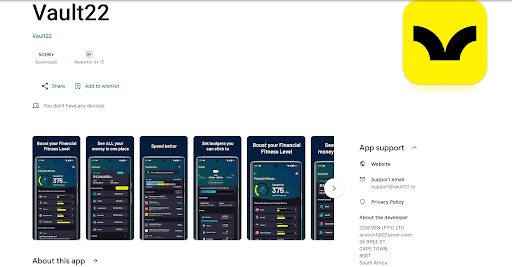
If you ask most South Africans about budgeting apps, 22seven is almost always the first name you hear. It’s now rebranded as Vault22, but it’s still the same trusted, go-to budgeting tool most of us grew up with.
Why South Africans rate it
- Connects to all major SA banks such as (FNB, Capitec, Nedbank, Absa, TymeBank, Standard Bank)
- Pull all your transactions into one place whether they’re from cards, bank accounts, e-wallets, or store cards.
- Automatically categorises expenses, so you can see where your money actually goes
- Completely free, no hidden catches
- Clear, easy-to-read dashboard that works for tech-savvy and non-tech-savvy users alike
Vault22 is best for:
- Anyone who wants pure budgeting, not a banking interface
- Users with multiple accounts across different banks
- People who want accurate spending insights without lifting a finger
Download Vault22
| Platform | Download Link | Downloads / Rating |
|---|---|---|
| Platform Android (Google Play) | Download Link | Downloads / Rating
500K+ downloads |
| Platform iOS (Apple App Store) | Download Link | React Native
⭐ 3.9 rating |
2. Nedbank Money App (Africa)
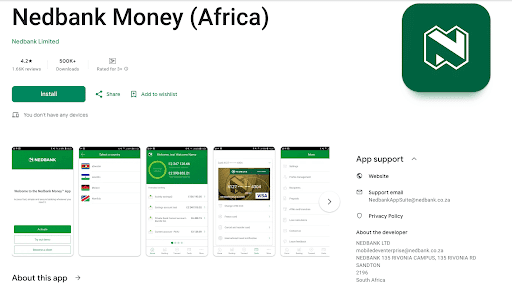
You don’t always need a separate budgeting tool. Nedbank quietly built surprisingly good budgeting features into their official Money App (Africa). If you already bank with Nedbank, this is one of the easiest ways to get started with real budgeting without extra apps or setup.
What makes it genuinely useful
All your banking + budgeting in one place:
Check balances, pay people, move money, track spending — no switching apps, no extra logins.
Automatically categorises your spending:
Every card swipe gets sorted into categories like groceries, transport, data/airtime, takeaways, entertainment, bills, and more.
Smart monthly insights:
See patterns, spikes, and habits that show exactly why your money runs out before payday.
Create monthly budgets per category:
Set limits for groceries, eating out, transport, etc. The app tracks everything in real time.
Clear view of debit orders & subscriptions:
Spot unwanted debit orders, track recurring payments, and stop ones you no longer want.
Built-in credit score tracking:
Monitor your credit health without paying for an external service.
Bank-level security (obviously):
Biometrics, encryption, and secure login as per the same standard Nedbank uses for all banking.
Nedbank Money App is Best for:
Nedbank customers who want hassle-free budgeting without downloading another app.
Download the Nedbank Money App
| Platform | Rating | Downloads | Download Link |
|---|---|---|---|
| Platform Google Play Store (Android) | Rating
⭐ 4.2 | Downloads
500,000+ downloads
| Download Link |
| Platform Apple App Store (iOS) | Rating
⭐ 3.0 | Downloads
Apple does NOT show
| Download Link |
3. FNB App – Smart Budgeting
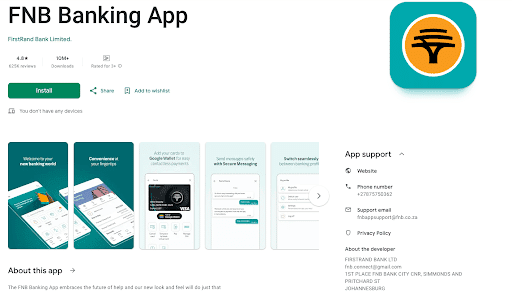
FNB has a reputation for being the most tech-forward bank in South Africa, and their Smart Budgeting feature shows why. It’s clean, automated, and genuinely useful for anyone trying to get control of monthly spending without spreadsheets.
Why South Africans rate FNB Smart Budgeting
Clear monthly budget breakdowns
See exactly how much goes to groceries, transport, eating out, subscriptions, data/airtime, and more.
Real-time overspending alerts:
The app notifies you before you go over your budget, not after.
Create savings goals effortlessly:
Set targets for an emergency fund, holiday, school fees, or big purchases — and the app tracks your progress.
Automatic spend categorisation:
Every swipe is sorted for you, so you instantly know where your money went.
Works perfectly with eBucks:
Healthy spending habits can improve your reward level, which means savings on fuel, groceries, and online shopping.
Integrated with everyday banking:
Your accounts, transactions, goals, and budgets all sit in one secure place.
FNB App is Best for:
People who want budgeting + rewards + banking in one powerful ecosystem.
Download the FNB App
| Platform | Download Link | Rating | Downloads |
|---|---|---|---|
| Platform Android (Google Play) | Download Link | Rating
⭐ 4.8 | Downloads
10M+ downloads |
| Platform iOS (App Store) | Download Link | Rating
⭐ 4.8 | Downloads
10M+ downloads |
4. Capitec App – Spend Tracker
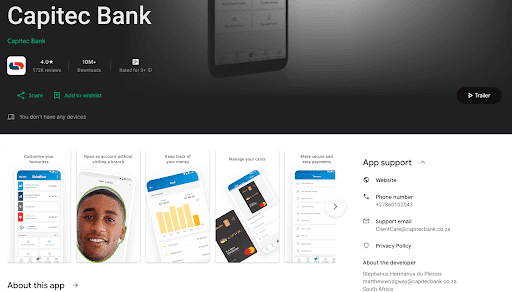
Capitec’s Spend Tracker is all about clarity. No complicated dashboards. No overwhelming charts. Just a clean breakdown of what you spent, where you spent it, and how fast it’s going.
Why South Africans actually use it
- You get a clear breakdown of what you spent and on what (food, transport, lifestyle — the usual culprits).
- Instant transaction notifications, so you always know what came off.
- Super easy to read, even when you’re half-asleep checking your balance after a night out.
- Great for tight budgets because it helps you spot problems before month-end catches you off guard.
Capitec App is Best for
Anyone who wants quick clarity on their spending without learning a whole new budgeting system.
Download the Capitec App
| Platform | Download Link | Rating | Downloads |
|---|---|---|---|
| Platform Android (Google Play) | Download Link | Rating ⭐ 4.0 | Downloads
10M+ downloads |
| Platform iOS (App Store) | Download Link | Rating ⭐ 2.8 | Downloads
Apple does NOT show |
So… Which App Is “Best App For Budgeting” in South Africa?
It depends on what you need:
| Need | Best Option |
|---|---|
| Need Pure budgeting | Best Option Vault22 |
| Need Best banking + budgeting combo | Best Option Nedbank Money App |
| Need Most advanced budgeting tools | Best Option FNB Smart Budgeting |
| Need Simplest, cleanest spend tracking | Best Option Capitec App |
What Features South Africans Actually Want in a Budgeting App
After working with fintech teams and analysing local user behaviour, one thing is obvious,South Africans want budgeting apps that fit our real financial habits, not generic tools built for other markets.
Here’s what consistently matters:
1. Bank integration that actually works
For South Africans, reliable bank syncing is non-negotiable. If an app can’t connect smoothly to Capitec, FNB, Standard Bank, Absa, Nedbank, or TymeBank, people simply won’t use it. Failed syncs, missing transactions, or “data unavailable” errors break trust instantly.
2. Simple, readable dashboards
South Africans don’t want complicated charts or finance jargon. They want an app that shows exactly where the money went quickly and clearly. The ideal dashboard includes clean spending categories, month-to-month comparisons, alerts when budgets slip, and straightforward goal tracking.
3. Fair, transparent pricing
SA users are willing to pay for value, but they’re allergic to unnecessary debit orders. Pricing needs to be clear, fair, and easy to understand. People don’t mind a small monthly fee if the app genuinely helps them manage money better but hidden charges, aggressive paywalls, or premium pricing for basic features feel like another financial burden. If the cost feels like a “surprise” deduction waiting to happen, they’ll uninstall the app immediately.
4. Cultural and financial relevance
South African money behaviour is unique. A budgeting app has to understand realities like black tax, side hustles, lay-bys, store accounts, airtime vs data spending, and seasonal or contract income. Many international apps fail here because they’re not built for local patterns
5. Real security and trust
When linking their bank accounts, people expect bank-grade security and full transparency. If users can’t immediately see how their data is protected, or why certain permissions are needed, they won’t proceed. Trust is everything.
When Should a Business or Fintech Build Its Own Budgeting App?
Most guides skip this, but it’s critical. If you’re in fintech, banking, lending, or building financial products, budgeting isn’t just a feature but it can be a strategic advantage. A well-built budgeting tool can improve retention, loyalty, and even monetisation.
1. When you need features third-party apps can’t provide
Off-the-shelf apps often fall short for fintech products. If your users expect custom financial journeys, rewards programmes, behaviour-based nudges, deep bank or wallet integrations, real-time analytics, or AI recommendations, a generic app will leave gaps. Building your own app allows you to design features specifically around your users’ needs, giving you flexibility to innovate.
2. When full data ownership matters
Relying on third-party apps means limited access to user data. You may not see all transactions, behaviour patterns, or category-level insights. Owning your own app lets you control data flow, custom dashboards, and analytics, which directly improves personalisation, risk scoring, and retention. Simply put, data ownership = product power.
3. When you’re building a broader financial ecosystem
If your product is part of a neobank, digital wallet, lending platform, investment tool, employee financial wellness app, or stokvel/savings solution, budgeting becomes core. It’s not just a feature; it’s the glue that keeps users engaged across your ecosystem. Third-party apps rarely integrate seamlessly across multiple products, so a custom solution ensures cohesion.
4. When differentiation is key
Most fintech apps let users send money, save, or pay bills. Few help them understand or control their money. A custom budgeting app gives you a unique competitive advantage: personalised insights, smarter recommendations, and experiences that stand out in a crowded market.
5. When compliance and local integrations are required
South Africa’s financial ecosystem is unique. Building your own app allows easy compliance with SARB, POPIA, and local bank APIs, as well as smoother connections to credit bureaus and payment providers like Ozow, Yoco, Paystack, and Stitch. Third-party apps rarely accommodate these local requirements effectively.
Inshort:
Building your own app, especially when using the right mobile application development platforms. gives you custom features, better UX, full data control, local compliance, stronger trust, market differentiation, and new monetisation opportunities, all designed around your users’ needs.
Conclusion
We’ve selected the top budgeting apps in South Africa by analysing bank integration, user experience, cultural relevance, pricing, and real-world user behaviour. These apps show what South Africans value most, simplicity, clear insights, and tools that actually fit our financial realities.
For fintech startups, financial institutions, or businesses, there’s also an opportunity to build your own custom budgeting app. Doing so allows you to:
- Deliver unique features your users can’t get elsewhere
- Retain full control of financial data and insights
- Ensure local compliance with SARB, POPIA, and banking APIs
- Create better UX that keeps users engaged
- Open up new monetisation opportunities, from premium features to subscription models
Launching a custom budgeting app can even help you rethink monthly fees or reward models, turning financial management into a strategic advantage.
If your business is ready to explore this path, connect with Digital Humanity, a leading app development company in South Africa to build secure, user-focused, and monetisation-ready fintech apps that meet the needs of South African users.
Related Blogs
Development
How to Build a Budgeting App in South Africa (Complete 2026 Guide)
South Africa is experiencing a rapid shift toward digital money management. Rising living costs, increasing household debt, and widespread mobile banking adoption have created strong demand for budgeting apps that help individuals and businesses manage their finances better.

DevelopmentStrategy
Low-Code vs. Custom Mobile App Development: What’s Best for South African Startups in 2026?
Low code mobile app development vs custom mobile app development is a question South African startups in 2026 are asking in one of the most competitive and cost-sensitive environments the country has ever seen. Funding is more selective, customers expect world-class digital experiences, and infrastructure realities like load shedding, data costs, and device diversity still shape how mobile apps are used.
Strategy
Best 6 Payment Gateways in South Africa: How to Choose and Integrate the Right One
If you’re searching for payment gateways in South Africa, you’re not here for theory. You want to know which options exist, how they actually work, and which one will perform best once integrated into your website, store, or app. South African payments aren’t simple, customers use cards, EFT, QR codes, and instalments, often on the same site.